The first cold dawn of autumn came the way the first ones always do — not with frost, quite, but with breath you could suddenly see.
By evening it had turned into an ordinary cold night, the kind that makes a fire worth sitting at, and Marrow Wren was building hers up when the door opened on its latch and Coll Ashford came in with nothing in his hands.
That was the first thing she noticed. Not a hammer, not an armful of split logs, not the length of fence-rail he had a habit of carrying in as though the fire might need it. He hung his coat on the peg, and then — Marrow kept her face very still — he crossed the room and sat down by the hearth. First. Before anyone had handed him anything to do.
Two autumns ago, on the first snow, she had told him he was allowed to sit in the warm without earning it. He had believed her, more or less. Tonight he had simply done it, and she did not remark on it, the way you do not remark on a shy animal that has finally come the whole way across the yard.
She set a second bowl down across from her own, and sat.
“I walked the grey to Honeystane this morning,” Coll said. He turned the bowl in his big hands and, because he had learned that too, ate a little before he went on. “I've a story. If you'll have it.”
Marrow Wren had heard a great many roads told at that fire. She had never once heard one offered before she had so much as looked at the teller. “I'll have it,” she said.
It had gone like this. He laid it down carefully, low and even, the way he had that first snow, like a man stacking wood.
The grey was the inn's one horse: an old cart-mare the colour of wet slate, who hauled firewood in from the wood's edge and the market things back from town, and who had never been called anything but the grey. The inn had no sign. The shops in Honeystane had no names painted over their doors. Nobody had ever thought the mare was going without.
Her near hind shoe had worked loose over the summer, and the roads were about to go hard, so Coll had haltered her before light and taken her down the river road — the one everyone calls the new road, though it is as old as the other two — at the only pace she had.
An hour, at a horse's walk. The valley came up grey around them and then less grey; mist lay on the water and the reeds stood in it up to their knees. Then the road bent, and the town was there on its slope under the crag, and the light was doing what it does to Honeystane in the first of the morning — the pale stone of the walls going the colour of honey a little before the sun had properly reached it, so that the town seemed to have been warm already, waiting. Nobody there looks up at that. It is only what the stone does.
He took her in at the West Port and turned down the lane that runs inside the wall there — Farriers' Loan, the townsfolk call it, because it was a lane for driving beasts along before it was anything else, and it still is; the ground is trodden earth, not cobbles, out of kindness to hooves. A coppersmith's yard further down had its shutters open and its fire not yet lit. The farrier's yard had.
It was the one warm thing in the blue-grey morning: a low open-sided shed against the wall, a hearth of stacked stone with a bed of coals gone orange at the heart, and the smell of hot iron and horse coming off it into the cold. Three travellers' horses waited along the rail, saddled already, blowing white. One of their riders sat on the mounting-block with a cup in both hands and hurried nobody.
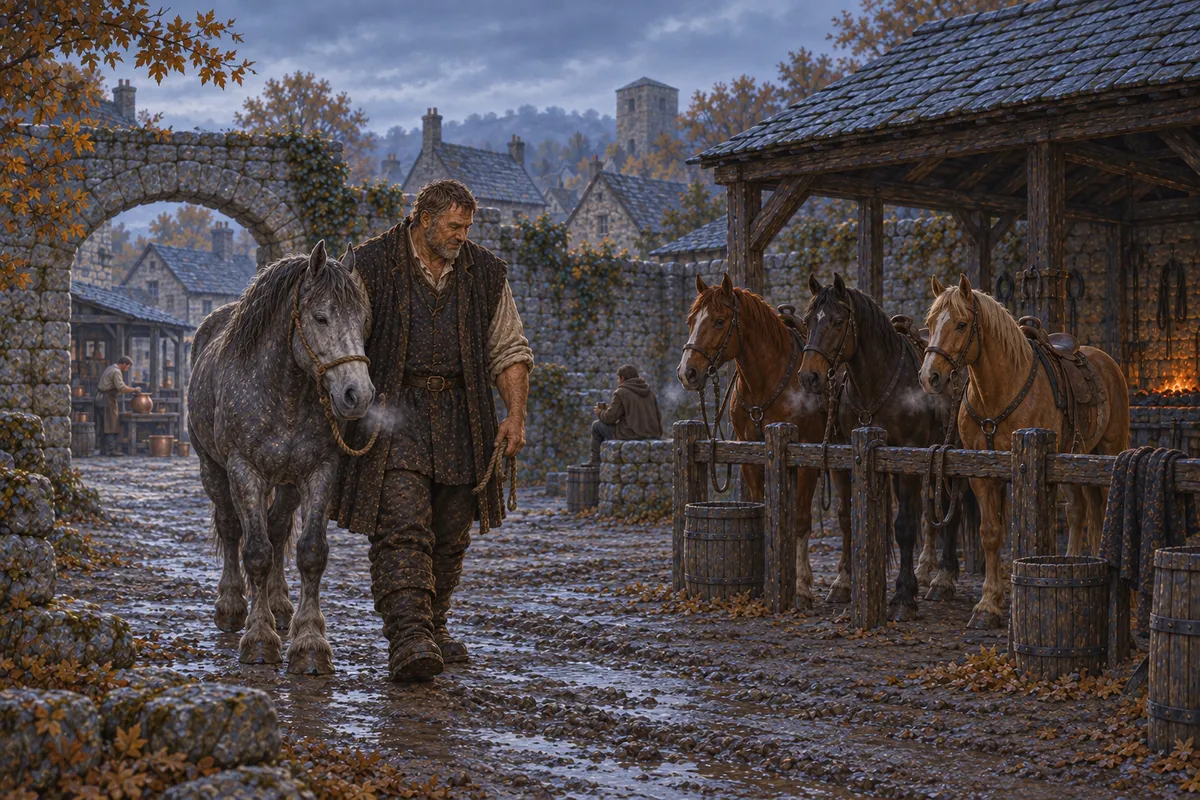
The farrier was a man about Coll's own age, built the way farriers are built — not tall, but wide through the shoulder and thick through the forearm, in a leather apron scarred pale where a thousand hooves had rested. He did not look up when Coll came in. He was under a bay gelding with the near fore between his knees, and he said, to the hoof, “Tie her up. I'll come to her.”
So Coll tied her up, and waited. He was good at waiting; it was one of the few things the loud years had left him that was worth keeping.
The bay was done and led off, and the next one in was a young chestnut who had never liked any of this and did not intend to start. She danced. She threw her head. The farrier stood back with the rasp in his hand, the way a man stands back from a door that will open when it is ready — and Coll, who had not been asked, stepped in and took her head.
He did not haul on it. He put one great hand flat on her face and the other on her neck under the mane, and leaned his weight not against her but beside her, so that she had something to be still against; and he breathed slow and out, the way he had learned to on cold nights a long way north, and after a moment the chestnut breathed like that too. Her foot came up into the farrier's hands as though it had meant to all along.
The farrier worked. He did not look up. But when the shoe was on and the foot set down, he said, wiping his hands, “You've a good hold.”
Coll told that part plainly, a fact laid down. But he stopped after it, the way he had stopped, two autumns ago, after telling her what the company used to call him. The one who holds. And here was the same word, in a stranger's mouth, in a yard full of horses, meaning a horse's head. A frightened animal steadied. Nothing kept out. Nothing held against.
“It was the same word,” he said to Marrow. “I hadn't known a word could be turned over like that. Like a stone, with the moss on the other side.”
The sun cleared the crag while the chestnut was being led away, and when it reached the castle up on its rock a bell rang out over Honeystane — not fast, not alarmed, six slow strokes and a seventh — and all down the lane people who had been half awake finished waking. Market morning. The farrier tipped his head at it without looking. “That came down this lane once,” he said. “As a gate. Portcullis off the castle. Went back up the hill as a bell.” He shrugged, as though it were the only sensible thing a gate could have done. “Rings the market in. Rings the dark in. Never once rung anyone to arms.”
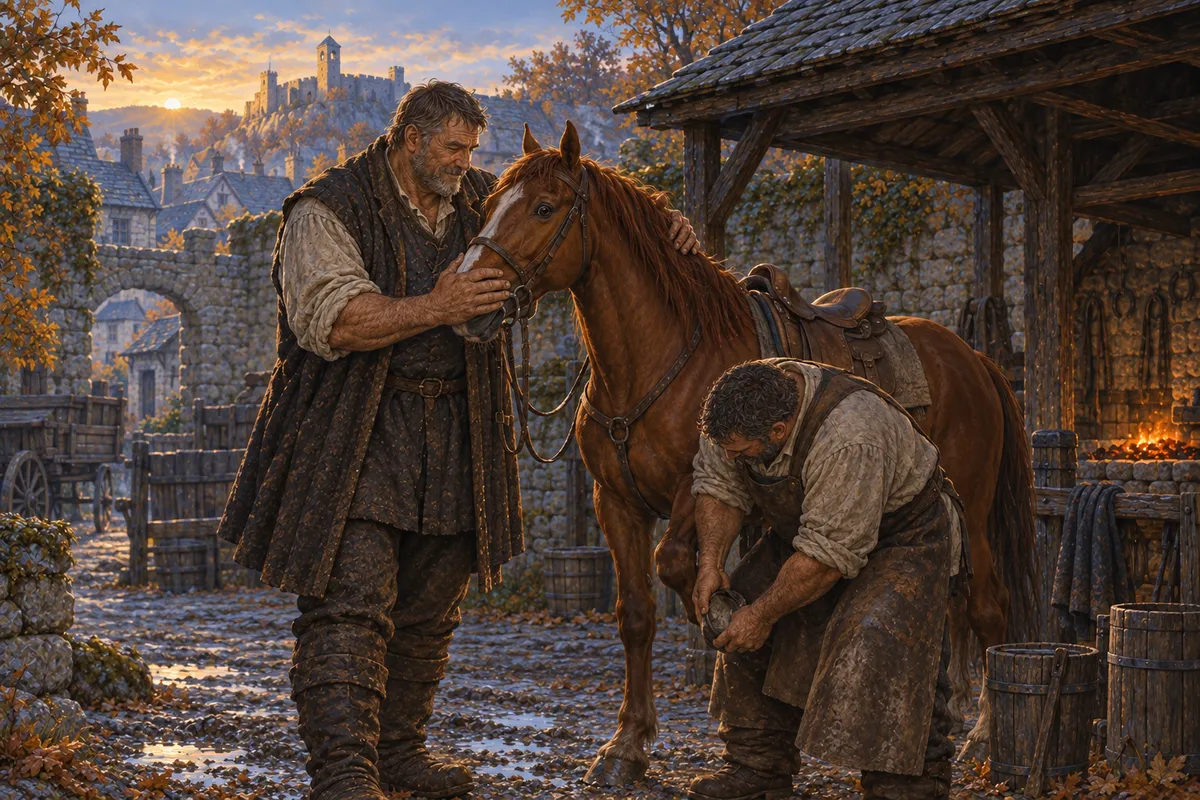
Coll had looked at the coals then, he told her. Not for long. There had been a fire once, in a stone hall above the snowline, that he had built up high for no better reason than that a room should be warm — the first fire he ever built that was not for staying alive. This one was the same colour. A strange thing, to have walked so far south and found the same fire waiting at the end of a lane, being used for horses.
Then it was the grey's turn.
She went in like the old hand she was and stood square, and the farrier lifted her near hind and looked at the loose shoe and grunted, which meant it was as Coll had said. He pulled it. He pared the hoof. He set the new shoe on the coals to take its shape, and while it heated he said, still not looking up, the thing farriers say to pass the time and settle a horse at once:
“What's she called?”
“She isn't,” Coll said.
The farrier took that without comment; but the grey, hearing two men talk over her, and the coals tick, and the strange yard all round, shifted her weight and would not quite put it back. And the farrier said, mild as milk, to nobody in particular:
“Lend her one, then. They go quieter to a name said low.”
Coll stood a moment. Then he did as he had for the chestnut: one hand on her face, one on her neck, his weight beside her. He put his forehead against the long grey bone of hers, so that his mouth was at her ear, and said a name into it.
He did not say it to Marrow, and she did not ask. It was not the name the company had given him, and it was not Ashford. It was the one from before all of that — the one somebody had used, once, who had never needed him to hold anything — and he had not said it aloud since the white years. He said it low. The grey's ear turned to it. He said it again, because you say a name twice to a horse. And the farrier, head down, the hot shoe hissing in the water, said it back once — correctly, without weight, the way you repeat a word you have been given so the giver knows you have it — and nodded, and went on with the foot.
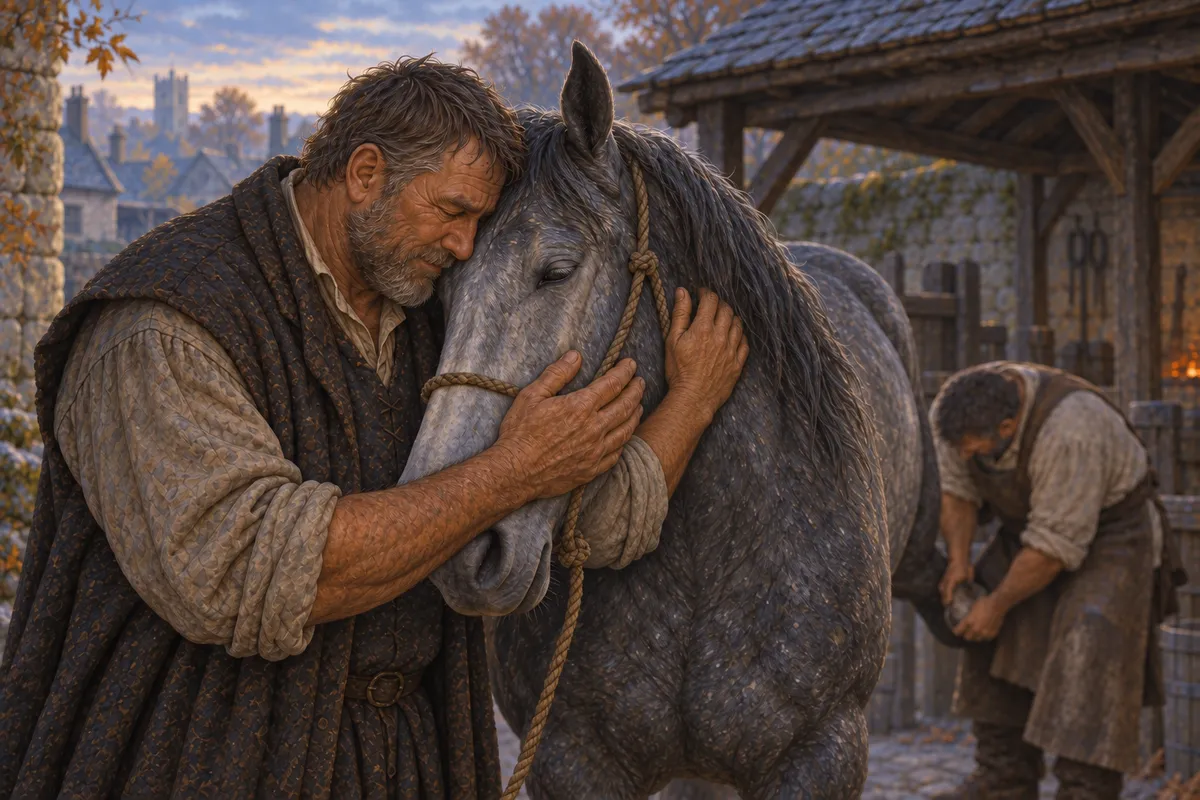
That was all. The grey put her weight down and left it there, and the shoe went on, and the farrier stood up and put a hand on her rump and said, “There. She'll go till spring.” He had already turned to the next horse. By the next market-day he could not have told anyone what he had heard, and would not have thought to try.
“Which,” Coll said to the fire, “is about the safest place I can think of to keep a name. In a man who's no use for it.”
A name kept is a secret. A name said — even once, even low — is a name again.
They came home by the river road with the new shoe ringing where the road goes stony, and by the time they crossed the ford she was the grey again and he had folded the other thing away where he kept it. Only it had been out, he said. That was the difference. It went back in lighter, the way a blanket comes back from being aired: the same blanket, all of it still there, and less to carry.
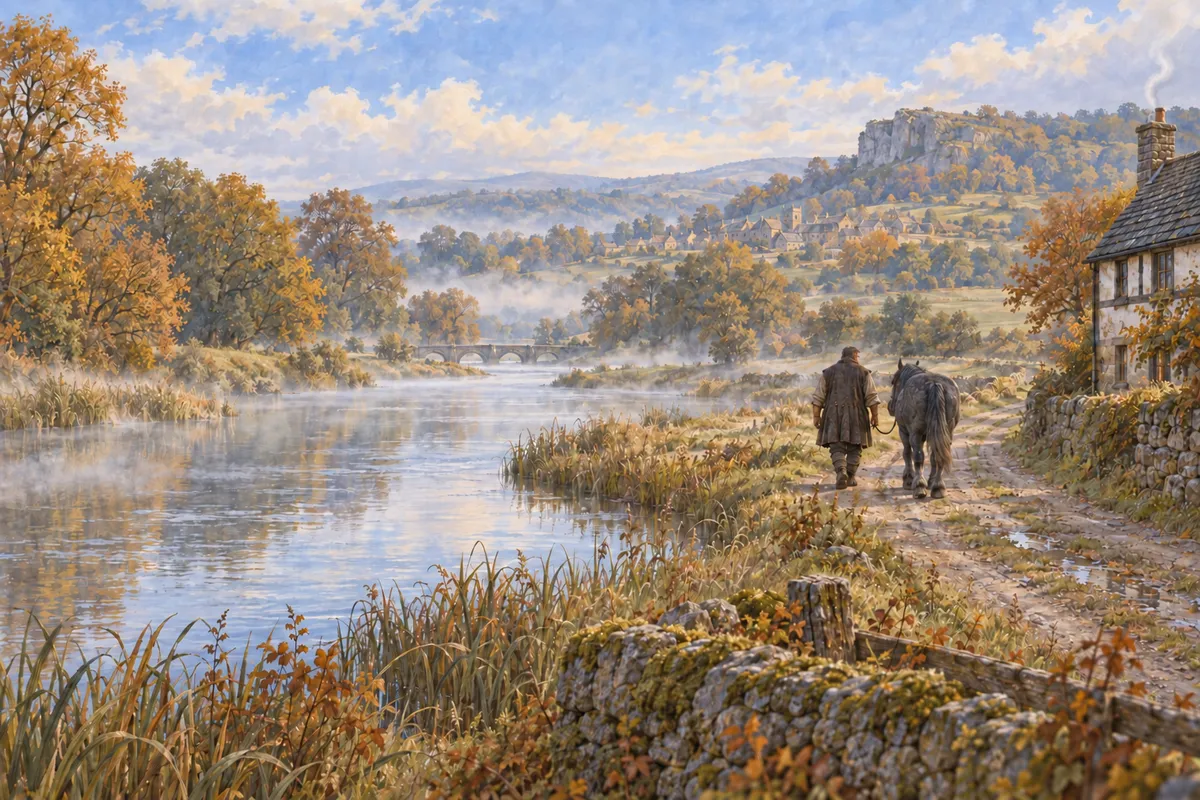
The inn came into sight the way it always did — grey stone below, pale wall and dark timber above, the slate roof, no sign anywhere to say it was anything but a long low house where three roads meet. Which is what it is. He put the grey up and rubbed her down and found, coming out of the stable, that it was not yet noon and there was nothing he needed to mend.
Marrow let the fire settle. On the wall behind him, where it had hung two years now, the torn corner of a young mapmaker's map showed the valley and the three roads and, along the fence-line, in a hand you had to lean close to read: here someone is always mending something. Tonight he had not. Tonight he had sat down first.
“Coll,” she said at last — and it was only his road-name, and they both knew it, and it was enough. “You paid for the bed two years ago. You know that.”
“I know it.” He almost smiled. “Tonight I paid because I wanted to. It's a different thing.”
“It is,” she said. “It's the only thing.”
She took down the ledger then, the thick soft-cornered book that smells of woodsmoke and holds the inn's whole memory in ink, and she did not write the name. She had not heard it, and would not have written it if she had. On the first snow, two autumns ago, she had left that line empty because he had not yet said it. Tonight she left it empty because he had — and there is all the difference in the world between those two blank spaces, though they look the same on the page. She wrote that a man had lent his oldest name to a horse for the length of a shoeing, and got it back lighter than he gave it. She wrote that an inn does not keep names; it keeps the people who need somewhere to set them down for a while.
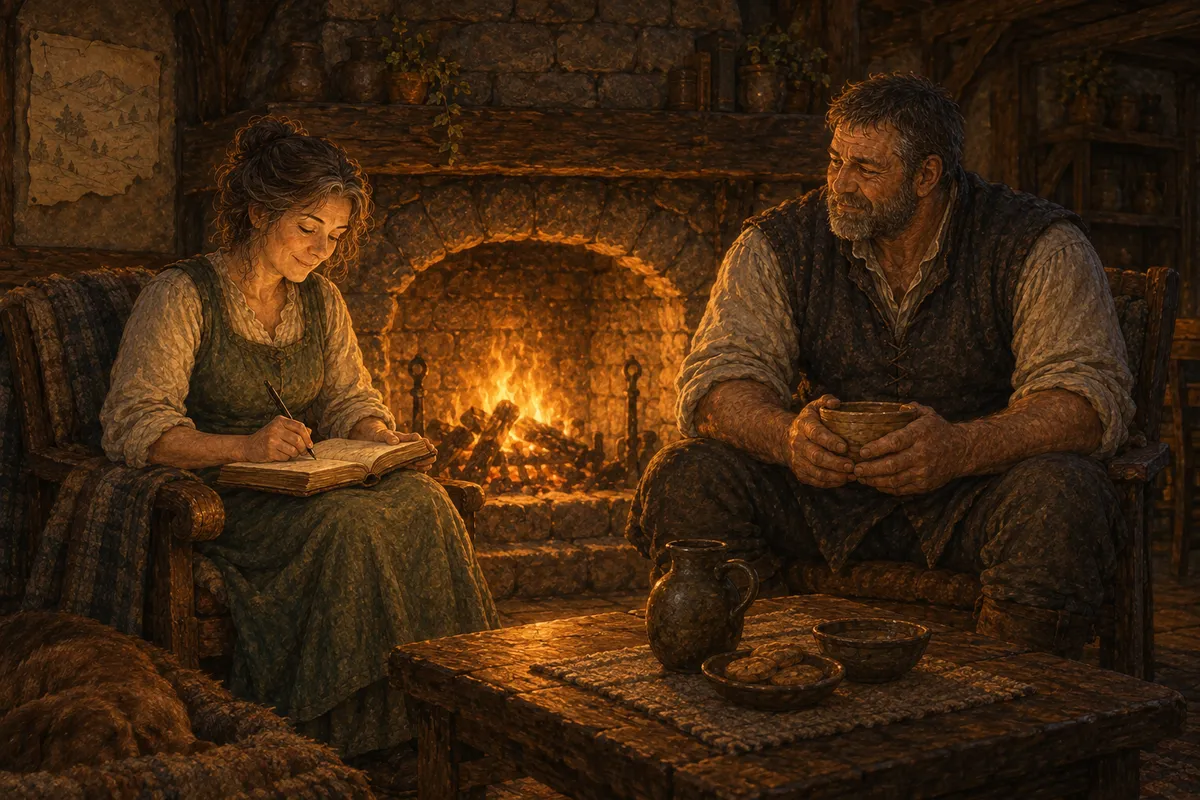
Then she banked the hearth for the night and left a little fire burning in it — for warmth — and it was one she had built herself, because the man who usually built it was, for once, only sitting by it.
Safe. And warm. And told.